

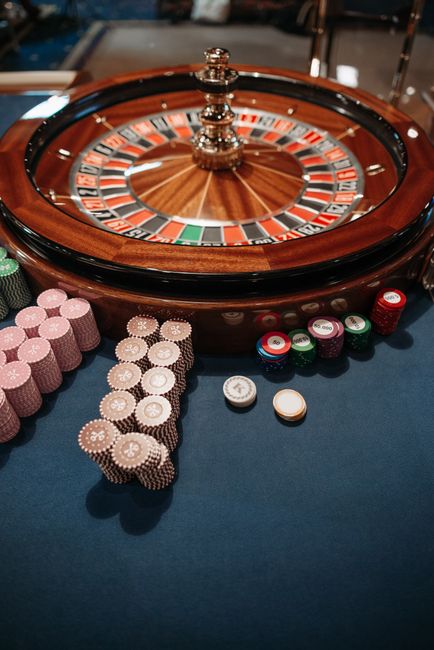
The Math Behind the Machine: What Every Slot Player Should Know
Nobody walks up to a slot machine expecting to lose. And yet, over time, most people do. That's not a conspiracy or bad luck — it's arithmetic. The moment you understand how slots actually make money, you stop treating them like a mystery box and start treating them like what they are: a form of paid entertainment with a predictable long-term edge for the house. That shift in perspective changes everything, from how you choose a game to how long you actually enjoy your session.
Let's pull back the curtain a little. Not to ruin the fun, but to sharpen it.
RTP, House Edge, and Why 96% Isn't as Good as It Sounds
Every regulated slot publishes a Return to Player (RTP) percentage, and it usually sits somewhere between 94% and 97%. New players see 96% and think "great, I'll get most of my money back." In reality, RTP describes the expected payout across millions of spins — not your session, not tonight, not ever for a single player in any meaningful timeframe.
Take a 96% RTP slot with $1,000 wagered. The house expects to keep about $40 on average. Over a few hundred spins at a dollar each, that's a slow, steady leak. But variance means your actual result could be plus $400 or minus $600. RTP is a long-run average, and the long run is almost never your night.
What matters more is how fast you're cycling money through the machine. A high-volatility slot with a big max bet and rapid spin speed can burn through a bankroll in twenty minutes. The same RTP on a slower game with smaller bets stretches that bankroll across hours. Same math, wildly different experience.
Volatility: The Setting Nobody Bothers to Check
If RTP is the destination, volatility is the road. It tells you how the payouts are distributed.
- Low volatility: frequent small wins, gentle swings. Good for long, relaxed sessions on a modest bankroll.
- Medium volatility: the middle ground. Moderate frequency, moderate payouts.
- High volatility: long dry spells punctuated by large wins. Great if you're chasing a big score, brutal if you're on a tight budget.
Here's a concrete example. Two slots, both 96% RTP. Slot A hits something every 4 spins on average but rarely pays more than 5x your bet. Slot B goes 30 spins without a win and then hands you 200x. Over 10,000 spins, your expected result is identical. Over 100 spins — which is what most of us actually play — you'll have totally different experiences. Choose based on how much variance you can stomach, not on which game has the better-looking screenshots.
Blackjack and Poker: Skill Still Exists
Unlike slots, table games reward decisions. Blackjack played with basic strategy cuts the house edge to roughly 0.5% — far better than any slot machine. That doesn't mean you'll win, but it means the leak is much smaller. Skilled card counters in single-deck games with favorable rules have historically pushed that edge into the player's favor, which is precisely why casinos now use six- and eight-deck shoes, reshuffle more often, and pay 6:5 instead of 3:2 on blackjacks. The game is still beatable at a small edge if you're sharp, but the casino has engineered most of the advantage away. Those comparing choices often turn to สล็อต.
Poker is a different animal entirely. Cash games and tournaments aren't played against the house — they're played against other people, with the casino taking a rake (usually 5–10% of each pot, capped). That means a strong player can genuinely profit long-term. The catch is that "strong" is doing a lot of heavy lifting in that sentence. Most recreational players are losing internet poker consistently, not because of the rake alone, but because they're sitting across from people who have studied ranges, bet sizing, and game theory for years.
Bankroll Management: The Only Real Edge Most Players Have
You can't control the shuffle, but you can control your exposure. That's the entire point of bankroll management. Here's a simple framework that works for almost anyone:
- Set a monthly entertainment budget you'd be willing to spend on dinner and a movie. That's your ceiling — not your rent money, not your savings.
- Break it into session units. If you have $300 for the month, treat a single session bankroll as $50.
- Choose bet sizes accordingly. A common rule of thumb is 1–2% of your session bankroll per bet on slots, which means $0.50-$1.00 spins on a $50 session.
- Stop-loss and stop-win. Decide in advance: down 50% or up 100%, you walk. No exceptions, no "one more spin."
- Never chase losses. The machine doesn't know you're due. The next spin is independent of the last ten.
The gambler's fallacy — believing a cold machine is about to heat up — is the single biggest reason bankrolls evaporate. Each spin is its own event. Gambler's fallacy applies equally to poker sessions where you're card-dead all night; the deck doesn't owe you a big hand.
Bonuses and Promotions: Read the Fine Print
Welcome bonuses are flashy. A 100% match up to $500 sounds like free money until you read that it comes with a 40x wagering requirement. That means you'd need to wager $20,000 before withdrawing a single dollar, and slots contribute 100% toward the requirement while blackjack and video poker often contribute 10% or less. On a 95% RTP slot, the expected loss from clearing that requirement alone can exceed the bonus value.
Free spins are usually better, especially if they're wager-free. Reload bonuses, cashback deals, and loyalty programs can be genuinely valuable for regular players — but only if you're going to play anyway. A bonus should never be a reason to play more than you planned. That's how the house turns a marketing expense into a deposit.
The Bottom Line
Casino games are entertainment products with a built-in cost, no different from a concert ticket or a night at the pub. The difference is that the cost is variable, which tricks our brains into thinking we can beat it. Some people do, in the short run. Over time, the math collects. That's not a reason to avoid gambling — it's a reason to gamble with your eyes open: check RTP and volatility, pick your games deliberately, set your limits before you sit down, and treat every dollar you bring as money already spent on the experience. Do that, and you'll walk away with something genuinely valuable: a good time that didn't cost you more than you planned to spend.


Decluttering
-
Build a realistic weekly plan that covers kitchens, bathrooms and floors in short bursts, so your home stays fresh without marathon cleaning sessions.


Cleaning Routines




-

Long established fact that a reader will be distracted
-

Long established fact that a reader will be distracted
-

Long established fact that a reader will be distracted




Storage Ideas
Karla Gleichauf
12 May 2017 at 05:28 pm
On the other hand, we denounce with righteous indignation and dislike men who are so beguiled and demoralized by the charms of pleasure of the moment
M Shyamalan
12 May 2017 at 05:28 pm
On the other hand, we denounce with righteous indignation and dislike men who are so beguiled and demoralized by the charms of pleasure of the moment
Liz Montano
12 May 2017 at 05:28 pm
On the other hand, we denounce with righteous indignation and dislike men who are so beguiled and demoralized by the charms of pleasure of the moment